In the early stages of adulthood, money often feels like something to enjoy rather than something to manage. I remember when I first started earning—I felt a sense of freedom that I had never experienced before. But along with that freedom came mistakes, many of which I didn’t even realize at the time.
Looking back now, I understand that these early financial decisions can shape the future more than we expect.
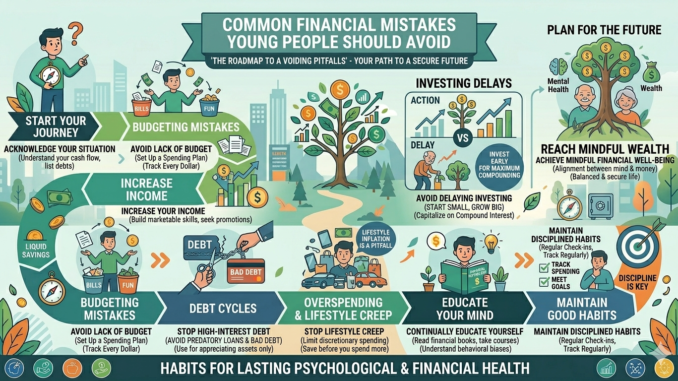
One of the most common mistakes young people make is not budgeting at all. It’s easy to assume that as long as money is coming in, everything is fine. That’s exactly what I thought.
I didn’t track my spending, and by the end of each month, I had no idea where my money had gone. It wasn’t until I started writing down my expenses that I realized how much I was spending on things I didn’t truly need.
Budgeting doesn’t mean restricting your life—it simply means understanding it.
Another major mistake is living beyond one’s means. With social media constantly showing lifestyles filled with travel, gadgets, and luxury, it’s easy to feel pressured to keep up.
I fell into that trap too—buying things just to feel included or to impress others. Over time, I realized that this mindset only leads to stress and financial instability. True financial confidence comes from living within your means, not beyond it.
Ignoring savings is another critical error. Many young people believe they can start saving later, once they earn more. I used to think the same way.
But the truth is, saving is not about how much you earn—it’s about consistency. Even small amounts set aside regularly can build a strong financial foundation over time. Once I made saving a habit, I began to feel more secure and prepared for unexpected situations.
Closely related to this is the mistake of not having an emergency fund. Life is unpredictable. Unexpected expenses—whether medical, personal, or technical—can arise at any time. I learned this the hard way when I had to deal with a sudden expense and had no backup plan. That experience taught me the importance of having at least a small emergency fund to rely on.
Another mistake many young people make is misusing credit and loans. Credit cards and easy loan options can seem convenient, but without proper understanding, they can quickly lead to debt. Interest rates, late fees, and repayment terms are often overlooked.
I once relied too much on credit without fully understanding the consequences, and it took time and discipline to recover. Learning how credit works is essential before using it.
Lack of financial education is also a hidden issue. Many young people simply don’t take the time to learn about money management. Schools often don’t teach practical financial skills, so it becomes a personal responsibility. From my experience, even basic knowledge—like understanding interest, budgeting, or simple investing—can make a huge difference.
Finally, not planning for the future is a mistake that’s easy to overlook. When you’re young, retirement or long-term goals feel far away. But time is actually your biggest advantage.
The earlier you start planning, the easier it becomes to achieve your goals. I only began thinking seriously about my future after making a few financial mistakes—and I wish I had started earlier.
Final Thoughts
Financial mistakes are not something to be ashamed of—they are part of the learning process. What matters most is recognizing them early and making changes. From my own journey, I’ve learned that small, consistent improvements can lead to significant long-term results.
Conclusion
In conclusion, avoiding common financial mistakes like overspending, neglecting savings, and misusing credit can make a huge difference in a young person’s life. Financial stability doesn’t happen overnight, but with awareness, discipline, and a willingness to learn, it is absolutely achievable. The earlier these lessons are understood, the stronger and more secure the future will be.
Leave a Reply