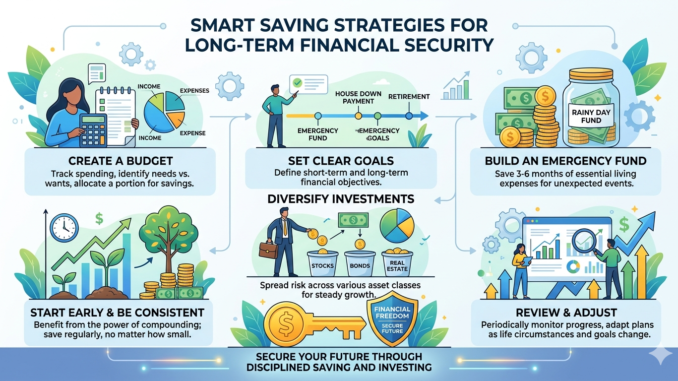
I still remember the moment I realized that simply “saving what’s left” at the end of the month wasn’t working. No matter how good my intentions were, there was rarely anything left to save. That was the turning point where I began treating saving as a priority—not an afterthought.
Building long-term financial security isn’t about earning a huge income overnight. It’s about developing smart, consistent saving habits that grow over time. In this article, I’ll share practical strategies—based on real-life experience—that can help you build a stronger financial future with confidence.
1. Pay Yourself First
One of the most effective strategies I’ve ever adopted is simple: save before you spend.
Instead of waiting to see what’s left at the end of the month:
- Set aside a fixed percentage of your income as soon as you get paid
- Treat savings like a non-negotiable expense
When I started doing this, even with a small percentage, I noticed immediate progress. It removed the temptation to spend first and save later—which rarely works in practice.
2. Build an Emergency Fund
Life is unpredictable. Unexpected expenses—car repairs, medical bills, or sudden job changes—can disrupt your finances overnight.
A solid emergency fund should cover:
- 3 to 6 months of essential expenses
From my experience, having this safety net doesn’t just protect your finances—it reduces stress in a way that’s hard to describe until you experience it yourself. It gives you breathing room when life doesn’t go as planned.
3. Automate Your Savings
Discipline is important, but systems are more reliable.
Set up automatic transfers:
- From your current account to your savings account
- On the same day you receive your income
I used to rely on willpower alone, and it was inconsistent. Automation changed everything—it made saving effortless and consistent without requiring daily attention.
4. Take Advantage of Compound Growth
Time is your biggest advantage when it comes to saving.
Even small, consistent contributions can grow significantly over the years thanks to compound growth—where your savings generate earnings, and those earnings generate even more.
The earlier you start, the less you need to contribute to reach your goals. This is something I wish I had fully understood earlier, but once I did, it completely changed my approach to long-term planning.
5. Separate Your Savings Goals
Not all savings are the same. Mixing everything into one account can make it harder to stay motivated and organized.
Instead, create separate categories:
- Emergency fund
- Short-term goals (travel, gadgets, etc.)
- Long-term goals (retirement, investments)
When I started separating my savings, I found it much easier to stay focused. Watching progress in each category made the process more rewarding and tangible.
6. Reduce Unnecessary Expenses (Without Feeling Deprived)
Saving more doesn’t always mean earning more—it often starts with spending smarter.
Look for:
- Subscriptions you don’t use
- Impulse purchases
- Habits that quietly drain money over time
That said, don’t cut everything you enjoy. In my experience, extreme restriction leads to burnout. The goal is balance—cut what doesn’t add value, and keep what genuinely improves your quality of life.
7. Increase Your Savings Rate Gradually
You don’t need to save a large percentage immediately.
Start small—then increase over time:
- When your income grows
- When debts are paid off
- When expenses decrease
I began with a modest savings rate, but each small increase made a big difference over time. The key is consistency, not perfection.
8. Review and Adjust Regularly
Your financial situation will change—and your saving strategy should evolve with it.
Make it a habit to:
- Review your savings progress monthly or quarterly
- Adjust contributions when needed
- Revisit your goals
I’ve adjusted my strategy multiple times over the years, and each adjustment brought me closer to a system that truly fits my lifestyle.
Final Thoughts
Long-term financial security isn’t built on one big decision—it’s the result of many small, consistent actions over time. The habits you build today will shape your financial future more than any single opportunity or shortcut.
From personal experience, the most powerful change comes when saving becomes part of your identity—not just something you try to do occasionally.
Conclusion
Smart saving is not about restriction—it’s about intention and consistency.
Start where you are. Use what you have. Build gradually.
Over time, these strategies will not only strengthen your financial security but also give you something even more valuable: peace of mind and confidence in your future.
Leave a Reply