When I first started thinking about investing, I felt overwhelmed. There were so many terms—stocks, bonds, ETFs, risk tolerance—that it all sounded like a different language. I remember opening my first investment app, staring at the screen, and wondering, “Where do I even begin?”
If you’ve ever felt the same way, you’re not alone. The truth is, investing doesn’t have to be complicated. With the right mindset and a bit of patience, anyone can start building wealth over time. This guide is written from real experience—mistakes included—to help you take your first confident steps.
Why Investing Matters
Saving money is important, but investing is what truly helps your money grow. Inflation slowly reduces the value of cash sitting in a bank account. Investing, on the other hand, gives your money the chance to outpace inflation and build long-term wealth.
From my own journey, the biggest realization was this:
You don’t need to be rich to start investing—but you do need to start to become wealthy.
Understanding the Basics
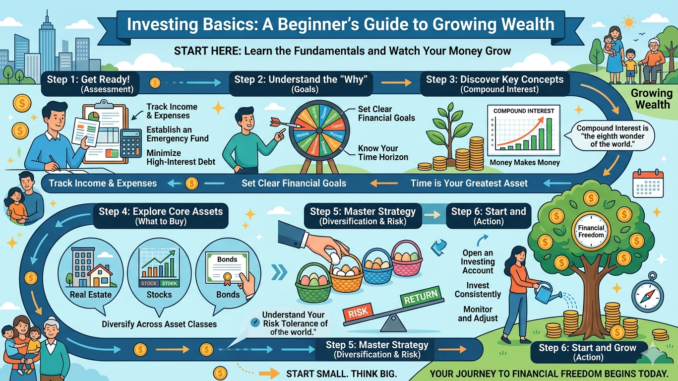
Before putting your money anywhere, it’s important to understand a few key concepts:
1. Stocks
Stocks represent ownership in a company. When the company grows, your investment can grow too. But prices can go up and down, sometimes quickly.
2. Bonds
Bonds are essentially loans you give to governments or companies. They tend to be more stable than stocks but usually offer lower returns.
3. ETFs (Exchange-Traded Funds)
ETFs are collections of stocks or bonds bundled together. They’re a great option for beginners because they provide diversification without needing to pick individual investments.
Start With a Clear Goal
One mistake I made early on was investing without a clear purpose. I was just “trying it out.” That approach led to emotional decisions—buying when prices were high and panicking when they dropped.
Ask yourself:
- Are you investing for retirement?
- A house?
- Financial independence?
Having a goal keeps you focused when the market gets unpredictable.
The Power of Consistency
You don’t need a large amount of money to begin. What matters more is consistency.
I started with a small monthly investment—an amount I could afford to lose without stress. Over time, I noticed something powerful: even small contributions add up when combined with compound growth.
Consistency beats perfection.
Risk: Don’t Fear It, Understand It
Every investment carries risk. The key is not to avoid risk completely, but to manage it wisely.
Here’s what helped me:
- Diversifying investments instead of putting everything in one place
- Avoiding emotional decisions during market dips
- Investing for the long term rather than chasing quick profits
One of my early mistakes was selling during a market drop out of fear. Looking back, if I had simply stayed invested, I would have been better off. That experience taught me patience more than any book ever could.
Build Good Habits Early
Successful investing isn’t about luck—it’s about discipline. Here are habits that made a real difference for me:
- Investing regularly, even during uncertain times
- Reinvesting dividends instead of withdrawing them
- Continuously learning and improving my understanding
Over time, these small habits created a strong foundation.
Avoid Common Beginner Mistakes
From personal experience, here are pitfalls to watch out for:
- Trying to “time the market”
- Following hype or trends without research
- Investing money you might need soon
- Expecting quick results
Investing is not a get-rich-quick scheme—it’s a long-term strategy.
Final Thoughts
If there’s one thing I wish I knew earlier, it’s that starting matters more than starting perfectly. You will make mistakes—I certainly did—but each one teaches you something valuable.
The journey of investing is as much about mindset as it is about money. Patience, discipline, and consistency will take you much further than trying to chase fast gains.
Conclusion
Investing is one of the most powerful tools for building wealth, but it doesn’t require expert knowledge to begin. By understanding the basics, setting clear goals, and staying consistent, you can gradually grow your financial future.
Think of investing as planting a tree. You won’t see results overnight, but with time, care, and patience, it will grow into something meaningful.
Start small, stay committed, and most importantly—give your money time to work for you.
Leave a Reply