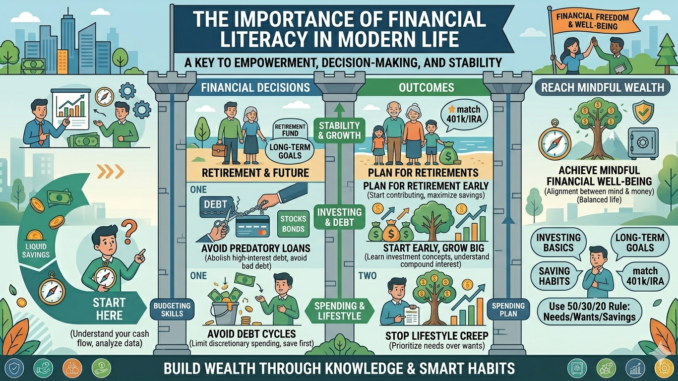
In today’s fast-changing world, financial literacy is no longer a luxury—it has become a basic life skill. From managing daily expenses to planning long-term goals, understanding how money works plays a crucial role in shaping a person’s future. As someone who has personally experienced both financial mistakes and gradual improvement, I’ve come to realize that financial knowledge can truly change the direction of one’s life.
When I first started earning money, I believed that as long as I had an income, everything would naturally fall into place. I spent without tracking, saved inconsistently, and ignored the importance of budgeting. It wasn’t until I faced unexpected expenses that I understood how unprepared I was. That experience became a turning point. I began learning about budgeting, saving, and even basic investing—and slowly, my financial situation started to improve.
Financial literacy empowers individuals to make informed decisions. It teaches us how to budget effectively, avoid unnecessary debt, and build a safety net for emergencies. In modern life, where digital payments, online shopping, and credit systems are deeply integrated, it is easy to lose control of spending. Without proper knowledge, many people fall into debt traps simply because they do not fully understand interest rates, loans, or credit systems.
Another important aspect is long-term planning. Financial literacy helps individuals think beyond immediate needs. Whether it is saving for education, buying a home, or preparing for retirement, having a clear financial plan provides both stability and peace of mind. Personally, once I started setting small financial goals—like saving a fixed percentage of my income each month—I noticed a sense of control and confidence that I had never felt before.
Moreover, financial literacy is not just about personal benefit; it also impacts families and communities. When individuals manage their finances wisely, they can support their families better and contribute positively to society. Financially educated people are more likely to invest in education, health, and opportunities that create long-term growth.
In the modern digital era, access to financial information has become easier than ever. However, the challenge lies in understanding and applying that information correctly. It is important to learn from reliable sources, practice consistently, and adapt to changing financial environments. Based on my experience, even small habits—like tracking expenses or avoiding impulsive purchases—can lead to significant improvements over time.
Final Thoughts
Financial literacy is a journey, not a one-time achievement. No one becomes financially perfect overnight. What truly matters is the willingness to learn, reflect, and improve. Mistakes are part of the process, but each mistake can become a valuable lesson if we take the time to understand it.
Conclusion
In conclusion, financial literacy is essential in modern life because it provides the foundation for stability, independence, and future growth. It helps individuals navigate challenges, make better decisions, and build a secure future. From my own experience, gaining financial knowledge has not only improved my financial situation but also changed the way I think about money and life. In a world full of uncertainties, financial literacy is one of the most powerful tools a person can have.
Leave a Reply