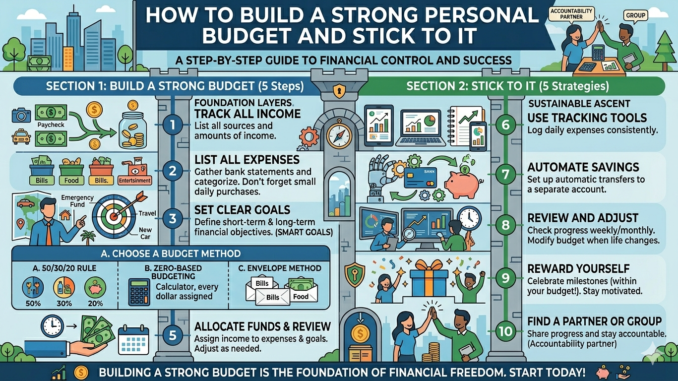
A few years ago, I found myself checking my bank account before every small purchase—coffee, groceries, even fuel. It wasn’t that I wasn’t earning enough; the real problem was that I had no clear idea where my money was going. That experience pushed me to build a personal budgeting system that actually worked—not just on paper, but in real life.
If you’ve ever felt the same way, you’re not alone. Creating a strong personal budget isn’t about restriction—it’s about clarity, control, and peace of mind. In this article, I’ll walk you through practical, experience-based steps to build a budget you can stick to long-term.
1. Understand Your Financial Reality
Before you can build a budget, you need a clear picture of your current situation.
Start by tracking your income and expenses for at least one month. Don’t estimate—use real numbers. Include everything:
- Fixed costs (rent, bills, subscriptions)
- Variable spending (food, transport, entertainment)
- Occasional expenses (gifts, repairs)
From my experience, this step alone can be eye-opening. I once discovered I was spending more on takeaway meals than on groceries—something I had never consciously noticed.
2. Set Clear, Personal Goals
A budget without a goal feels like a diet with no purpose—you won’t stick to it.
Ask yourself:
- Are you saving for an emergency fund?
- Paying off debt?
- Planning a big purchase or investment?
Your goals should be specific and meaningful to you, not just generic financial advice. When I started saving for a six-month emergency fund, it completely changed how I viewed my spending decisions.
3. Choose a Budgeting Method That Fits Your Life
There is no one-size-fits-all approach. The best system is the one you can realistically maintain.
Some effective methods include:
- 50/30/20 Rule: 50% needs, 30% wants, 20% savings
- Zero-Based Budgeting: Every pound has a job
- Envelope Method: Physical or digital spending limits per category
Personally, I found a hybrid approach worked best—structured enough to guide me, but flexible enough to adapt when life got unpredictable.
4. Build in Flexibility (This Is Crucial)
One of the biggest mistakes people make is creating a “perfect” budget that leaves no room for real life.
Unexpected costs will happen. Motivation will fluctuate.
Instead of aiming for perfection:
- Include a small “miscellaneous” category
- Allow occasional treats without guilt
- Adjust your budget monthly
Real-life insight: The budget that finally worked for me wasn’t the strictest one—it was the one I didn’t feel tempted to abandon.
5. Automate What You Can
Automation removes the need for constant discipline.
Set up:
- Automatic savings transfers
- Bill payments
- Investment contributions
This reduces decision fatigue and ensures consistency. Once I automated my savings, I stopped “forgetting” to save—and my financial progress became much more stable.
6. Track Progress Regularly (But Not Obsessively)
Check your budget weekly or monthly—not every hour.
Look for:
- Overspending patterns
- Areas to improve
- Progress toward your goals
Treat this as a review, not a punishment. A budget is a tool, not a test you pass or fail.
7. Change Your Mindset About Money
Sticking to a budget isn’t just about numbers—it’s about behavior.
Instead of thinking:
- “I can’t afford this”
Try:
- “Is this worth it compared to my goals?”
This small shift helped me make better decisions without feeling deprived.
8. Learn From Mistakes, Don’t Quit
You will overspend at some point. Everyone does.
The difference between success and failure is simple:
- Failure: Giving up after a mistake
- Success: Adjusting and continuing
I’ve had months where my budget completely fell apart—but those moments taught me more than the “perfect” months ever did.
Final Thoughts
Building a strong personal budget is less about strict rules and more about building awareness and habits. It’s a process of trial, adjustment, and growth. The most important thing is to create a system that fits your lifestyle—not someone else’s idea of financial perfection.
From personal experience, the real reward isn’t just saving money—it’s the confidence and control you gain over your life. When you know where your money is going, you stop feeling anxious about it.
Conclusion
A successful budget isn’t built overnight, and it doesn’t require perfection. It requires honesty, consistency, and a willingness to adapt.
Start small. Stay consistent. Learn as you go.
Over time, your budget will stop feeling like a restriction—and start feeling like a powerful tool that supports the life you actually want to live.
Leave a Reply