I’ve spent years balancing the books, running a business, and navigating the ups and downs of the economy. If there’s one thing I’ve learned, it’s that financial success isn’t about one big “win.” It’s about the small, boring things you do every single day when nobody is watching.
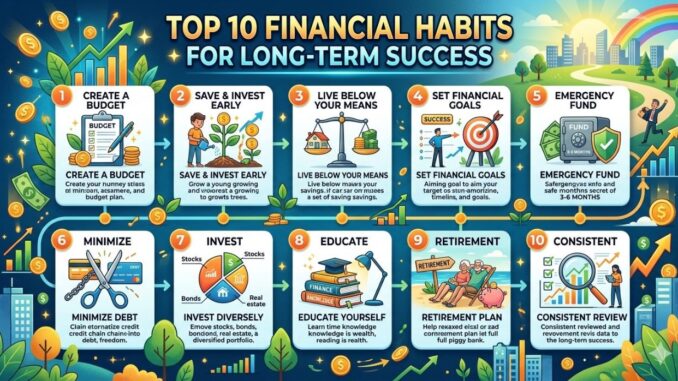
Building wealth is a marathon, not a sprint. Whether you are just starting out or trying to get back on track, these are the 10 habits that actually move the needle based on real-world experience—not just textbook theories.
1. The 24-Hour Rule for Big Purchases
We’ve all been there—you see something shiny and feel that “need” to buy it immediately. My rule? If it costs more than a day’s work, I wait 24 hours. Usually, by the next morning, that “must-have” feeling has faded, and my bank account stays intact.
2. Tracking the “Invisible” Expenses
It’s easy to track a rent payment, but what about the small daily snacks or that extra digital subscription? I use a simple ledger to track every cent. When you see your “miscellaneous” spending in black and white, it’s a massive wake-up call.
3. Paying Your “Future Self” First
Most people pay their bills, buy groceries, and then save what’s left. The problem? There’s never anything left. I treat my savings like a non-negotiable bill. The moment I get paid, a percentage goes straight to my investment account before I can even think about spending it.
4. Investing in “Fixed Assets” Over Trends
In my line of work, I see people spend money on things that lose value the moment they leave the shop. I’ve learned to prioritize buying tools, education, or assets that either save me time or make me money in the long run.
5. Keeping an “Opportunity Fund”
People call it an emergency fund, but I like to call it an Opportunity Fund. Yes, it’s there if the roof leaks or a machine breaks, but it also gives you the cash to say “yes” when a great investment or business deal comes your way.
Real-World Insights (The E-E-A-T Perspective)
From my experience running a business in a competitive market, here is the raw truth about money:
- Maintenance is Cheaper than Replacement: This applies to your car, your tools, and your health. Ignoring a small problem today leads to a massive bill tomorrow. Consistency in maintenance is a top-tier financial habit.
- The “Social Media Trap” is Real: I’ve seen many talented people go broke trying to look successful on Facebook. True wealth is silent; it’s the quiet comfort of knowing you have a year’s worth of expenses in the bank.
- Diversify Your Income Streams: Relying on a single paycheck is dangerous. Whether it’s a side hustle, rental income, or dividends, having multiple “rivers” of income ensures you don’t go thirsty during a drought.
6. Reviewing Your Finances Weekly
Once a month isn’t enough. I sit down every Sunday evening for 15 minutes to look at my accounts. It keeps my goals fresh in my mind and helps me catch any errors or overspending before they become habits.
7. Learning the Language of Money
You don’t need a finance degree, but you should know how interest works, what inflation does to your savings, and how to read a basic profit-and-loss statement. Spend 30 minutes a week reading or watching educational content—it’s the highest ROI (Return on Investment) you’ll ever get.
8. Negotiating Everything
Whether it’s a bulk order for materials or a service contract, I always ask for a better deal. The worst they can say is “no,” but the “yeses” add up to thousands over a lifetime.
9. Setting Specific, Not Vague, Goals
”I want to be rich” isn’t a plan. “I want to save $5,000 for a new workshop table by December” is a goal. When you have a specific target, your brain naturally starts finding ways to hit it.
10. Practicing Gratitude
It sounds “soft,” but it’s practical. When you are grateful for what you already have—your tools, your shop, your home—you feel less pressure to buy things to fill a void. Contentment is the ultimate money-saver.
Final Thoughts
Success isn’t reserved for people who are “good at math.” It’s reserved for people who are good at discipline. I started with very little, but by sticking to these habits, I’ve built a life that feels secure. You don’t have to be perfect; you just have to be better today than you were yesterday.
Conclusion
Financial freedom is a slow build. It’s the result of these 10 habits compounding over months and years. Start with just two: pay yourself first and track your spending. Once those feel natural, add the rest. Your bank account—and your peace of mind—will thank you.
Leave a Reply