We live in a world that is constantly trying to get us to part with our cash. Everywhere you look, there is a new gadget, a “must-have” service, or a lifestyle trend that promises happiness for a price.
But after years of working hard, running my own business, and seeing how quickly money can vanish if you don’t have a plan, I’ve realized that building wealth isn’t about how much you make—it’s about how much you keep and how hard that money works for you.
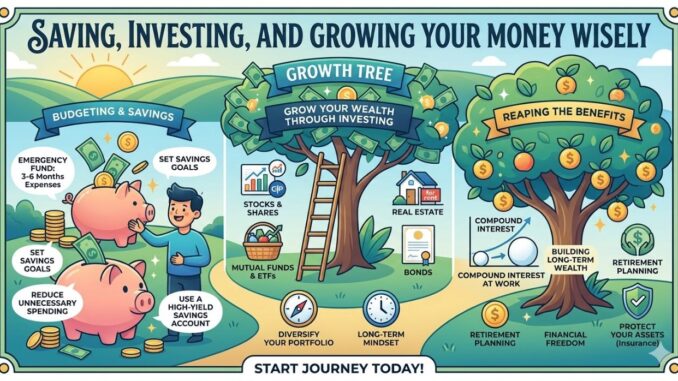
Here is my personal philosophy on the three pillars of financial freedom: Saving, Investing, and Growing.
1. Saving: More Than Just “Not Spending”
Most people view saving as a punishment, like a diet. I prefer to view it as buying my future freedom. * The “Envelope” Method (Digital Version): In my shop, I categorize my income immediately. I have a digital “envelope” for taxes, one for business maintenance, and one for personal savings. If the money isn’t in my “spending” account, I don’t touch it.
- The 72-Hour Cooling Period: Before I buy a new piece of equipment or a personal luxury, I wait three days. Usually, the “need” turns out to be a “want,” and I end up putting that money into my savings instead.
2. Investing: Turning Your Cash into a Worker
Saving is defensive; investing is offensive. If you just save, inflation will slowly eat away at your purchasing power. You need your money to be like a dedicated employee—working for you while you sleep.
- Start Small, But Start Now: I didn’t start investing with millions. I started with small, consistent amounts.
- Focus on What You Understand: I personally invest in things I can see or research deeply—like low-cost index funds that track the whole market or upgrading my own workshop tools that increase my daily output. Never put your money into something just because it’s “trending” on social media.
3. Growing: The Power of the “Snowball”
Wealth growth happens through the magic of compounding. It’s like a snowball rolling down a hill; it starts small, but as it rolls, it picks up more snow and moves faster.
My Experience: The hardest part is the first $1,000 or the first $10,000. It feels slow. But once you reach a certain point, the interest and returns start generating their own money. This is where you have to stay patient and avoid the urge to “harvest” your gains too early.
Human Insights & Lessons (E-E-A-T Perspective)
As someone who manages both personal finances and a physical business, I’ve learned a few “ugly” truths that the glossy bank brochures won’t tell you:
- Your “Emergency Fund” is your “Confidence Fund”: When I had no savings, I was stressed and made bad business decisions. Having six months of cash in the bank allowed me to negotiate better deals and work with better clients because I wasn’t “desperate” for the next paycheck.
- Avoid “Lifestyle Creep”: As my repair business grew and my income increased, I kept my living expenses exactly the same. That gap between what you earn and what you spend is where wealth is born.
- Invest in Your Skills: In 2026, the market changes fast. The best “investment” I ever made wasn’t a stock; it was a technical course that allowed me to offer specialized services that my competitors couldn’t.
Final Thoughts
Wise money management isn’t about being stingy; it’s about being strategic. It’s about realizing that every dollar you save today is a seed that will grow into a tree of security tomorrow. Don’t try to get rich overnight. Focus on being 1% better with your money every month.
Financial peace of mind is a much better feeling than the temporary “high” of buying something you don’t actually need.
Conclusion
To save, invest, and grow your money wisely, you need three things: a clear plan, a bit of discipline, and a lot of patience. Start by plugging the leaks in your spending, automate your investments so you don’t have to think about them, and give your money the time it needs to compound.
The road to wealth is often quiet and boring, but the destination—financial independence—is worth every single sacrifice.
Leave a Reply