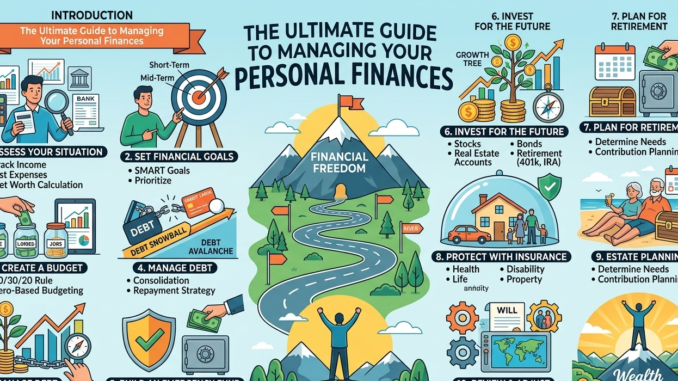
Managing personal finances is something most of us are never formally taught, yet it affects almost every aspect of our lives. I didn’t grow up with financial education, and like many people, I learned about money the hard way—through mistakes, stress, and slowly figuring things out on my own.
There was a time when I didn’t know where my money was going. I had income, but no structure. Some months felt comfortable, while others were unexpectedly tight. It wasn’t because I wasn’t earning enough—it was because I didn’t have a system.
Over the years, through trial and error, reading, and personal experience, I’ve developed a practical approach to managing money that actually works in real life—not just in theory. This guide is based on those experiences, and it’s written for anyone who wants to take control of their finances in a realistic and sustainable way.
Understanding Your Financial Reality
The first step in managing your finances is facing your current situation honestly.
I remember the first time I sat down and wrote out all my income, expenses, and debts. It wasn’t a comfortable moment, but it was necessary. Avoiding your financial reality doesn’t make it better—it only delays progress.
Start by asking yourself:
- How much do I earn each month?
- What are my fixed and variable expenses?
- Do I have any debts?
- Am I saving anything at all?
Clarity creates control. Without knowing where you stand, it’s impossible to move forward.
Creating a Realistic Budget
Budgeting often sounds restrictive, but in reality, it gives you freedom. A good budget isn’t about limiting your life—it’s about directing your money intentionally.
When I first tried budgeting, I made it too strict and failed quickly. Over time, I learned that a realistic budget should include:
- Essentials (rent, food, bills)
- Savings
- Investments
- Personal spending
The key is balance. If your budget feels like punishment, you won’t stick to it.
Building Strong Saving Habits
Saving money isn’t just about discipline—it’s about creating systems.
One of the most effective changes I made was automating my savings. As soon as I received my income, a portion was automatically moved into a separate account. This removed the temptation to spend first and save later.
Even if you start small, consistency matters more than the amount.
Emergency Fund: Your Financial Safety Net
Life doesn’t always go as planned. Unexpected situations can arise at any time.
I learned this lesson during a period when I faced an unexpected expense and had no savings to rely on. That experience made me realize the importance of having an emergency fund.
Ideally, aim to save at least 3 to 6 months’ worth of living expenses. It may take time, but having that safety net can reduce stress and give you confidence in uncertain times.
Managing and Eliminating Debt
Debt can either support your growth or hold you back, depending on how you manage it.
In my early financial journey, I underestimated how quickly debt could grow. Interest adds up, and without a clear repayment plan, it becomes overwhelming.
If you have debt:
- List all your debts clearly
- Prioritize high-interest ones
- Create a repayment strategy
- Avoid accumulating new unnecessary debt
It’s not about eliminating debt overnight—it’s about making steady progress.
The Importance of Investing
For a long time, I thought saving was enough. But saving alone rarely builds wealth—it preserves money, but investing helps it grow.
Once I started learning about investing, I realized that even small, consistent contributions could grow significantly over time.
You don’t need to be an expert to start. Begin with basic knowledge, stay consistent, and focus on long-term growth rather than short-term gains.
Controlling Spending Without Feeling Deprived
One of the biggest challenges in personal finance is controlling spending without feeling like you’re missing out.
I used to swing between overspending and extreme restriction. Neither worked.
What helped me was developing mindful spending habits:
- Pause before making non-essential purchases
- Ask if it aligns with your priorities
- Focus on value, not just price
You don’t need to cut out everything you enjoy—you just need to spend intentionally.
Setting Financial Goals That Matter
Goals give direction to your financial journey.
At one point, I was saving money without a clear purpose, and it felt unmotivating. Once I set specific goals—like building an emergency fund, investing monthly, and planning for long-term stability—everything changed.
Effective financial goals should be:
- Clear
- Measurable
- Realistic
- Time-bound
When your goals are meaningful, your habits naturally follow.
Continuously Improving Your Financial Knowledge
Financial literacy is a lifelong process.
I made it a habit to regularly learn about money—through books, articles, and real-life observation. The more I learned, the better decisions I made.
But beyond theory, experience matters just as much. Some of the best lessons come from mistakes.
Developing a Long-Term Mindset
Managing personal finances isn’t about quick wins—it’s about long-term consistency.
There were times when progress felt slow. But over the years, those small efforts started to compound into real results.
A long-term mindset helps you:
- Stay patient
- Avoid impulsive decisions
- Focus on sustainable growth
Final Thoughts
If I could go back and give my younger self one piece of advice, it would be this: take control of your money early, even if you don’t feel ready.
You don’t need to have everything figured out. You just need to start.
Managing personal finances isn’t about perfection—it’s about progress. There will be mistakes, and that’s part of the journey. What matters is learning, adjusting, and moving forward.
From my own experience, the moment you become intentional with your money, everything begins to change—not just financially, but mentally as well.
Conclusion
Personal finance is one of the most important life skills you can develop. It affects your freedom, your stress levels, and your future opportunities.
The good news is that it’s never too late to start.
No matter where you are today—whether you’re struggling, stable, or already doing well—there’s always room to improve.
Start with small steps. Stay consistent. Keep learning.
Because in the end, managing your finances isn’t just about money—it’s about building a life that feels secure, balanced, and truly your own.
Leave a Reply