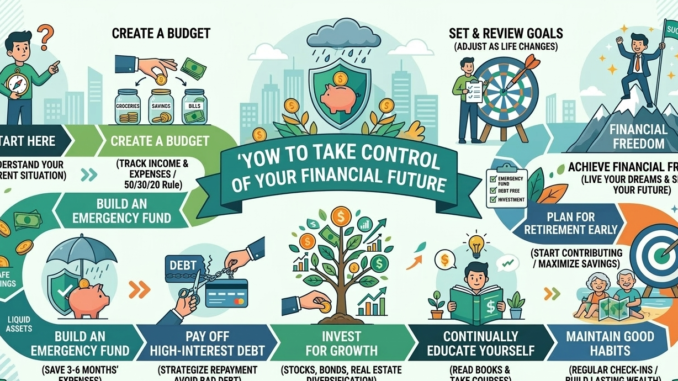
There’s a moment in life—sometimes quiet, sometimes uncomfortable—when you realize that your financial situation isn’t going to change unless you take responsibility for it.
I remember that moment clearly. It wasn’t dramatic. I was just sitting one evening, looking at my bank balance, wondering how my salary had disappeared so quickly again. No major purchases, no big lifestyle—yet nothing left. That’s when it hit me: it wasn’t about how much I earned. It was about how I managed what I had.
Taking control of your financial future isn’t about being perfect or becoming an expert overnight. It’s about making conscious decisions, learning from experience, and building habits that support the life you actually want.
This guide is not theory. It’s based on real-life lessons, mistakes, and gradual improvements—things that anyone can apply, no matter where they’re starting from.
Understanding Where You Stand
Before you can move forward, you need to understand your current financial position.
For a long time, I avoided checking my finances in detail. It felt easier not to know. But the truth is, avoiding your numbers only gives them more control over you.
When I finally sat down and wrote everything out—income, expenses, debts—it wasn’t pleasant, but it was powerful. For the first time, I had clarity.
Ask yourself honestly:
- What is my total monthly income?
- Where does my money actually go?
- Do I have savings?
- Am I carrying debt?
You can’t improve what you don’t measure.
Shifting Your Mindset About Money
One of the biggest changes I had to make wasn’t in my bank account—it was in my mindset.
I used to think money was something that just came and went. Something unpredictable. But over time, I realized that money is a tool, and like any tool, it needs to be managed intentionally.
Taking control means:
- Accepting responsibility for your financial decisions
- Letting go of blame (past mistakes, circumstances, etc.)
- Focusing on what you can control today
This shift alone can change everything.
Creating a Simple, Sustainable Plan
You don’t need a complicated financial system. In fact, the simpler it is, the more likely you are to stick with it.
When I first tried to “fix” my finances, I overcomplicated everything. I downloaded multiple apps, created detailed spreadsheets, and set unrealistic targets. Within weeks, I gave up.
Eventually, I simplified my approach:
- Track income and expenses
- Save a fixed percentage
- Limit unnecessary spending
- Review progress monthly
That’s it. And it worked.
Consistency beats complexity every time.
Building the Habit of Saving First
One of the most practical habits you can build is saving before you spend.
In the past, I would spend first and try to save whatever was left—which was usually nothing. Once I reversed that habit, things started to change.
Now, whenever I receive income, I immediately set aside a portion for savings. Even if it’s small, it creates a pattern.
Over time, that pattern becomes discipline—and discipline becomes results.
Preparing for the Unexpected
Life has a way of surprising us, and not always in good ways.
An unexpected expense can completely disrupt your finances if you’re not prepared. I’ve experienced that stress firsthand, and it’s not something I would wish on anyone.
That’s why building an emergency fund is essential.
Start small if you have to. The goal isn’t perfection—it’s progress. Even a small financial cushion can make a big difference when life throws something unexpected your way.
Managing Spending With Awareness
Controlling spending doesn’t mean cutting out everything you enjoy. It means being intentional.
I used to spend money without thinking too much about it—small purchases here and there that didn’t feel significant at the time. But over a month, they added up.
What helped me was creating a simple pause:
Before buying something, I ask myself, “Do I really need this, or am I just reacting to a moment?”
That small habit has saved me more money than any strict budget ever did.
Dealing With Debt Realistically
Debt can feel overwhelming, especially when it starts to grow faster than expected.
I’ve had periods where I underestimated how serious debt could become. Ignoring it didn’t help—it only made things worse.
The turning point came when I faced it directly:
- I listed all my debts
- Focused on high-interest ones first
- Made a clear repayment plan
Progress was slow at first, but it was progress. And that’s what matters.
Investing in Your Future
Saving money is important—but investing is what helps you grow it.
For a long time, I hesitated to invest because I thought I didn’t know enough. But waiting didn’t help me—it only delayed growth.
Once I started learning and taking small steps, I realized that investing doesn’t require perfection. It requires patience and consistency.
Even small amounts, invested regularly, can build something meaningful over time.
Setting Goals That Keep You Focused
Without goals, it’s easy to lose direction.
There was a time when I was saving money without any clear purpose. It felt pointless, and eventually, I lost motivation.
Everything changed when I started setting specific goals:
- Saving a certain amount
- Becoming debt-free
- Building long-term financial stability
Goals give your money a purpose. And when your money has a purpose, your habits become stronger.
Staying Consistent, Even When It’s Hard
This is where most people struggle—not because they don’t know what to do, but because staying consistent is difficult.
There were months when I wanted to give up. Progress felt slow. Results weren’t immediate.
But looking back, the biggest difference came from not quitting.
Small actions, repeated over time, create real change.
Final Thoughts
Taking control of your financial future is not about making one big decision—it’s about making better decisions consistently.
From my own experience, the journey is not always smooth. There will be setbacks, unexpected expenses, and moments of doubt.
But every step you take—no matter how small—moves you closer to stability and freedom.
You don’t need to be perfect. You just need to be intentional.
Conclusion
Your financial future is not determined by luck or circumstance alone—it’s shaped by your daily habits, your mindset, and your willingness to take responsibility.
No matter where you are right now, you have the ability to change your direction.
Start with awareness. Build simple habits. Stay consistent.
Because in the end, taking control of your finances isn’t just about money—it’s about creating a life where you feel secure, confident, and in control of your own path.
Leave a Reply