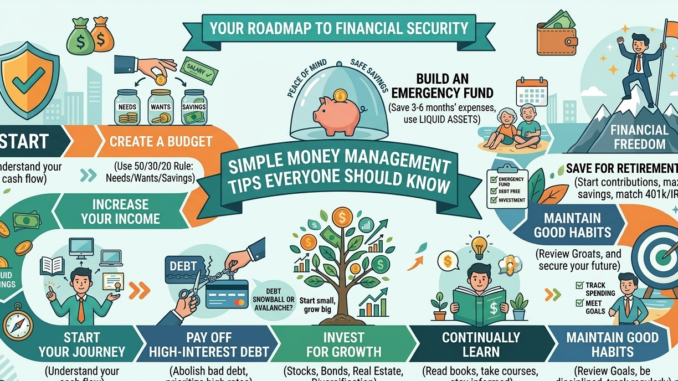
Money management is one of those life skills that seems simple on the surface but becomes surprisingly complex when you actually try to apply it in real life. I used to think managing money was just about earning more and spending less. But over time—and through quite a few financial mistakes—I realized it’s much deeper than that.
There was a period in my life when I had a stable income, yet I constantly felt financially stuck. I wasn’t reckless, but I wasn’t intentional either. Some months I saved a little, other months I saved nothing. It felt inconsistent and frustrating.
It wasn’t until I started applying a few simple, practical habits that things began to change. Not overnight, not dramatically—but steadily. These are the same tips I wish someone had shared with me earlier, explained in a way that actually makes sense in everyday life.
1. Know Exactly Where Your Money Goes
This might sound basic, but it’s one of the most important steps.
For a long time, I had only a vague idea of my spending. I knew the big expenses like rent and bills, but the small daily spending? That was invisible.
When I finally tracked everything for a month, I was honestly surprised. Small purchases—coffee, snacks, online subscriptions—added up more than I expected.
You don’t need anything fancy. Just write it down:
- Daily expenses
- Weekly totals
- Monthly overview
Awareness is the foundation of control.
2. Spend Less Than You Earn (Always)
It sounds obvious, but in reality, many people struggle with this.
There was a time when I adjusted my lifestyle every time my income increased. More income meant more spending. And because of that, I never really moved forward financially.
Once I made a conscious decision to always spend less than I earn—no matter what—things started to improve. Even a small gap between income and expenses creates room for saving and growth.
3. Save Before You Spend
This is one of the simplest but most powerful habits.
I used to save whatever was left at the end of the month. Most of the time, there was nothing left.
Now, I treat savings as a priority. As soon as I receive income, I set aside a portion—even if it’s small.
It changes your mindset. You start building your future first, instead of relying on leftover money.
4. Build an Emergency Fund Slowly
Life doesn’t always go according to plan.
I’ve faced situations where unexpected expenses came up, and I wasn’t prepared. That kind of stress is something I’ll never forget.
An emergency fund doesn’t need to be built overnight. Start small. Even saving a little consistently can grow into something meaningful.
The goal is simple: create a financial cushion so you’re not forced into debt when life surprises you.
5. Avoid Unnecessary Debt
Debt can be useful in some cases, but unnecessary debt is one of the biggest obstacles to financial stability.
I’ve made mistakes here myself—buying things I didn’t truly need, thinking I’d “figure it out later.” But later always comes, and it’s usually more stressful.
Before taking on debt, ask yourself:
- Is this necessary?
- Can I afford it without borrowing?
- Do I have a plan to repay it?
Simple questions, but they can prevent long-term problems.
6. Keep Your Lifestyle in Check
One of the easiest ways to lose financial control is through lifestyle inflation.
As you earn more, it’s natural to want to upgrade your life. I’ve been there—better gadgets, more eating out, small luxuries that slowly become normal.
But here’s the truth: if your spending grows as fast as your income, your financial situation doesn’t actually improve.
Learning to control your lifestyle—even as your income grows—is a game changer.
7. Set Clear, Personal Financial Goals
Saving money without a goal can feel pointless.
I used to save randomly, without any clear purpose. It didn’t motivate me, and eventually, I stopped.
Everything changed when I started setting clear goals:
- Saving for emergencies
- Reducing debt
- Building long-term security
When your money has a purpose, your habits become stronger.
8. Learn Basic Financial Skills
You don’t need to be an expert, but having basic financial knowledge makes a huge difference.
I started with simple things:
- Understanding budgeting
- Learning about saving and investing
- Reading real-life financial experiences
What made the biggest difference wasn’t just knowledge—it was applying it.
9. Be Patient With Your Progress
This is something I struggled with a lot.
In the beginning, progress feels slow. You might save a little, pay off a bit of debt, but it doesn’t feel like a big change.
There were times when I felt like giving up. But looking back, those small steps added up more than I expected.
Money management is not about quick results. It’s about long-term consistency.
10. Stay Honest With Yourself
At the end of the day, the most important habit is honesty.
There were times when I ignored my financial reality because it was uncomfortable. But avoiding it only made things worse.
Being honest means:
- Acknowledging mistakes
- Adjusting your habits
- Taking responsibility
It’s not always easy, but it’s necessary.
Final Thoughts
If there’s one thing I’ve learned from managing my own money, it’s this: you don’t need complicated strategies to improve your finances.
What you need are simple habits, applied consistently.
You will make mistakes—I certainly did. But those mistakes are part of the process. What matters is that you learn from them and keep moving forward.
Money management is not about being perfect. It’s about being aware, intentional, and willing to improve.
Conclusion
Taking control of your money doesn’t require a big transformation overnight.
It starts with small steps:
- Tracking your spending
- Saving regularly
- Making thoughtful decisions
Over time, these small actions create stability, confidence, and freedom.
No matter where you are today, you have the ability to improve your financial situation.
Start simple. Stay consistent.
Because in the end, managing money well isn’t about how much you have—it’s about how wisely you use it to build a better future.
Leave a Reply